



Our Design Philosophy
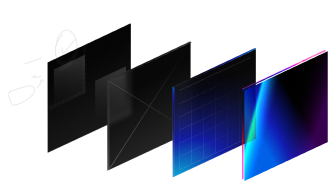



Aesthetic Meets Function
We balance usability, performance, and clarity, core to great digital product design.
Human-Centered Design
Every decision starts with real user behaviors, not assumptions.
Scalable Design Systems
We build scalable systems and modular design libraries to support evolving products across platforms.
Outcome-Oriented
We design experiences that balance user needs and business goals, enabling measurable engagement and sustained product success.
Scalable Design Systems
Our design system development supports evolving products with scalable, modular libraries across platforms.
Holistic Evaluation for Smarter Product Investments
User Research and Behavioral Mapping
UX Audit and Competitive Benchmarking
Information Architecture and Interaction Design
Persona Development and User Journey Mapping
We implement modeling algorithms for customer behavior prediction and optimized pricing strategies. Our expertise also includes trend analysis and sales revenue forecasting based on historical data.
Data-Driven UX Validation
Every decision starts with real user behaviors, not assumptions.
We build scalable systems and modular design libraries to support evolving products across platforms.
We design for engagement and business outcomes that drive measurable user actions and business impact.
Our design system development supports evolving products with scalable, modular libraries across platforms.
We balance usability, performance, and clarity, core to great digital product design.

Conducting in-depth studies to understand user motivations, decision flows, and friction points that shape product engagement.

Analyzing current product experiences against industry best practices and competitor positioning to uncover improvement opportunities.

Structuring navigation, workflows, and interaction patterns that prioritize clarity, usability, and conversion

Creating behavioral personas and mapping end-to-end journeys to ensure every interaction feels intuitive and outcome-driven.
UX Validation

Using qualitative and quantitative feedback to validate design choices, identify early friction points, and optimize for product success.


Computational Design Specialist, WZMH
Computational Design Specialist, WZMH
What Differentiates Us?



Behavior-First Design Thinking
Every decision is anchored in understanding user needs, behaviors, and adoption patterns rather than surface-level preferences.
Measurable Business Impact
Our success metrics go beyond usability scores, focusing on adoption rates, engagement retention, and downstream conversion outcomes.


Cross-Functional Integration
Designers work alongside engineering and product teams from day one, ensuring what’s designed can be built, scaled, and sustained.
Systems Built for Scalability
We create modular, extensible design systems that are ready to evolve as products grow and user needs change.



Strategic Validation Before Execution
We validate design decisions against business goals and technical realities before moving to full execution.
Reliable Healthcare Solutions
Delivering uninterrupted performance and reliability for mission-critical healthcare products that improve patient outcomes and operational efficiency.

Ensuring uninterrupted performance for mission-critical products
Ensuring uninterrupted performance for mission-critical products
Ensuring uninterrupted performance for mission-critical products
Ensuring uninterrupted performance for mission-critical products
Ensuring uninterrupted performance for mission-critical products





What factors determine whether a product is ready for machine learning integration?
A product is ready for ML integration when it has consistent data sources, clear problem definitions, and measurable patterns that can be translated into predictive tasks. Teams must evaluate data quality, labeling requirements, system constraints, and expected model outcomes. Readiness is confirmed when the product can support ongoing model monitoring, retraining, and performance validation within its existing architecture.
What does an end-to-end machine learning development engagement typically include?
An ML engagement includes defining the prediction task, preparing data pipelines, feature engineering, model training, evaluation, deployment, and lifecycle monitoring. It also involves establishing infrastructure for retraining, drift detection, and performance tracking. This ensures models remain accurate under real-world usage and that engineering teams can manage ML behavior as product needs evolve.
How does machine learning improve user behavior prediction in digital products?
ML models identify behavioral patterns using historical interactions, event sequences, and contextual signals. They help predict user churn, preference likelihood, task completion probability, and feature usage. Insights from these predictions support recommendations, workflow optimization, and improved personalization. Behavior prediction enables teams to make decisions grounded in data rather than assumptions.
Item 6
How do information architecture and interaction design work together?
Information architecture (IA) and interaction design are complementary disciplines. IA focuses on structuring content, navigation, and workflows to make information easy to find and understand. Interaction design defines how users engage with those structures through interface elements, gestures, and feedback mechanisms.
Together, they shape the overall usability and efficiency of a product. Rootquotient applies both in tandem, ensuring that navigation paths are logical, interfaces are responsive, and every interaction supports conversion and engagement goals. For instance, in enterprise software UI modernization, aligning IA with interaction design can dramatically improve onboarding speed and reduce user errors.
How is UX design validated using data?
Data-driven UX validation involves testing design choices through a combination of qualitative and quantitative methods. Qualitative feedback from user testing, interviews, and surveys reveals subjective experiences, while quantitative metrics like task completion rates, conversion rates, and engagement retention offer measurable evidence of success.
At Rootquotient, we integrate these methods throughout the design process, making iterative adjustments based on real-world performance. This ensures that changes lead to tangible improvements in adoption rates and business outcomes. In SaaS product UX design, for example, validating a redesigned dashboard might show a 20% increase in feature usage.
How can modular design systems improve scalability?
A modular design system is a collection of reusable UI components, styles, and interaction patterns that ensure consistency and efficiency across a product. These systems make it easier to add new features, support multiple platforms, and maintain brand coherence as products scale.
At Rootquotient, our design systems are extensible, allowing teams to integrate new modules without redesigning from scratch. This approach supports long-term scalability, reduces development time, and lowers the risk of UI inconsistency. In fintech user experience optimization, a modular design system ensures that new transaction features look and feel consistent with existing ones, enhancing trust and usability.
What role does MLOps play in scaling and maintaining machine learning systems?
A modular design system is a collection of reusable UI components, styles, and interaction patterns that ensure consistency and efficiency across a product. These systems make it easier to add new features, support multiple platforms, and maintain brand coherence as products scale.
At Rootquotient, our design systems are extensible, allowing teams to integrate new modules without redesigning from scratch. This approach supports long-term scalability, reduces development time, and lowers the risk of UI inconsistency. In fintech user experience optimization, a modular design system ensures that new transaction features look and feel consistent with existing ones, enhancing trust and usability.